

Find out more
Learn to Swim at Lancing
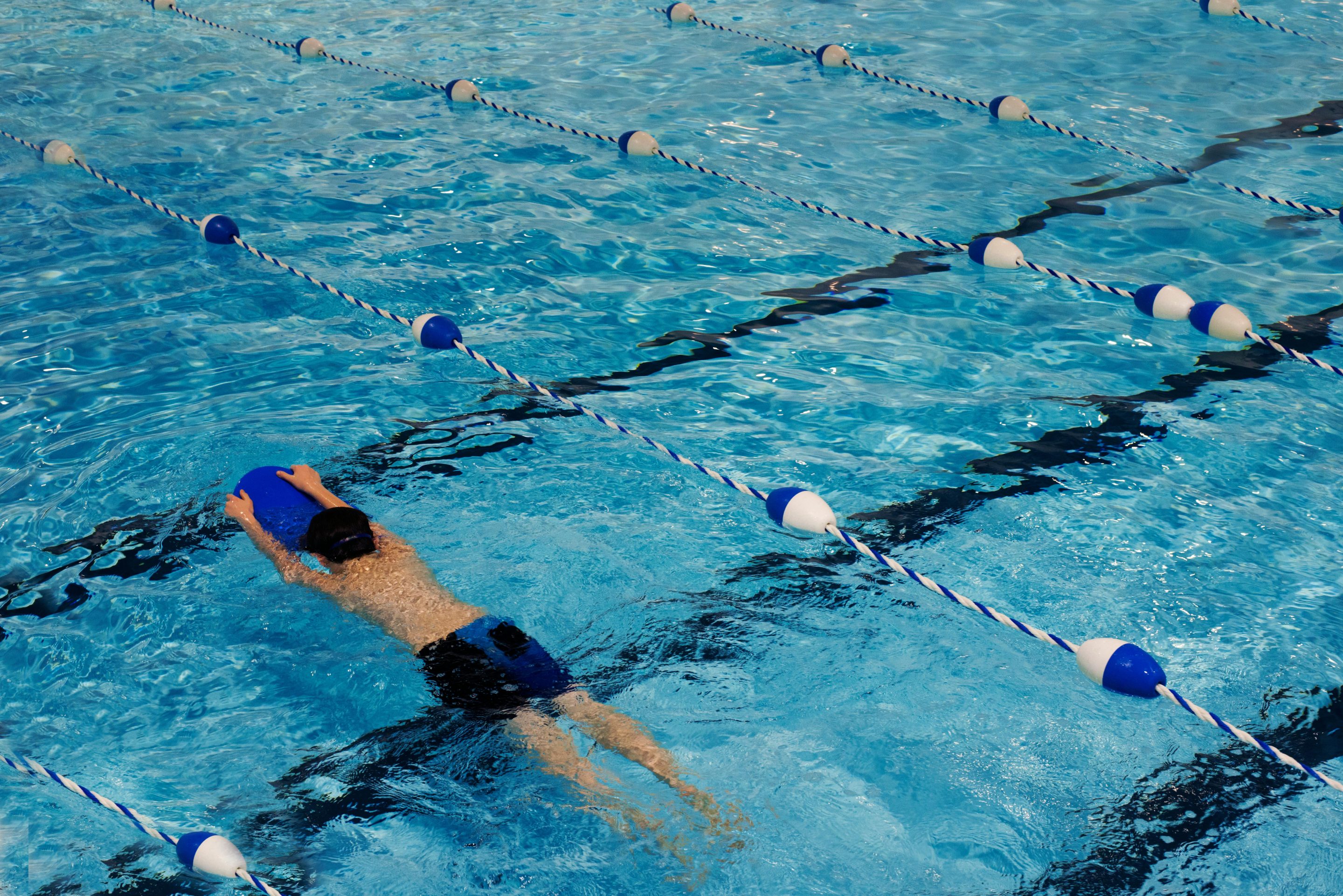
Based at Lancing College, we offer fun, engaging, and structured swimming lessons for children aged 3–11 of all abilities. With easy local access and free on-site parking, we make it simple and convenient for families to get involved.
At Lancing College Swim School, our mission is to provide high-quality swimming lessons within a supportive, encouraging, and enjoyable environment. Through excellent teacher-to-swimmer ratios, experienced and passionate instructors, and outstanding customer care, we aim to help every swimmer develop confidence, competence, and a lifelong love of the water.
Baby and toddler
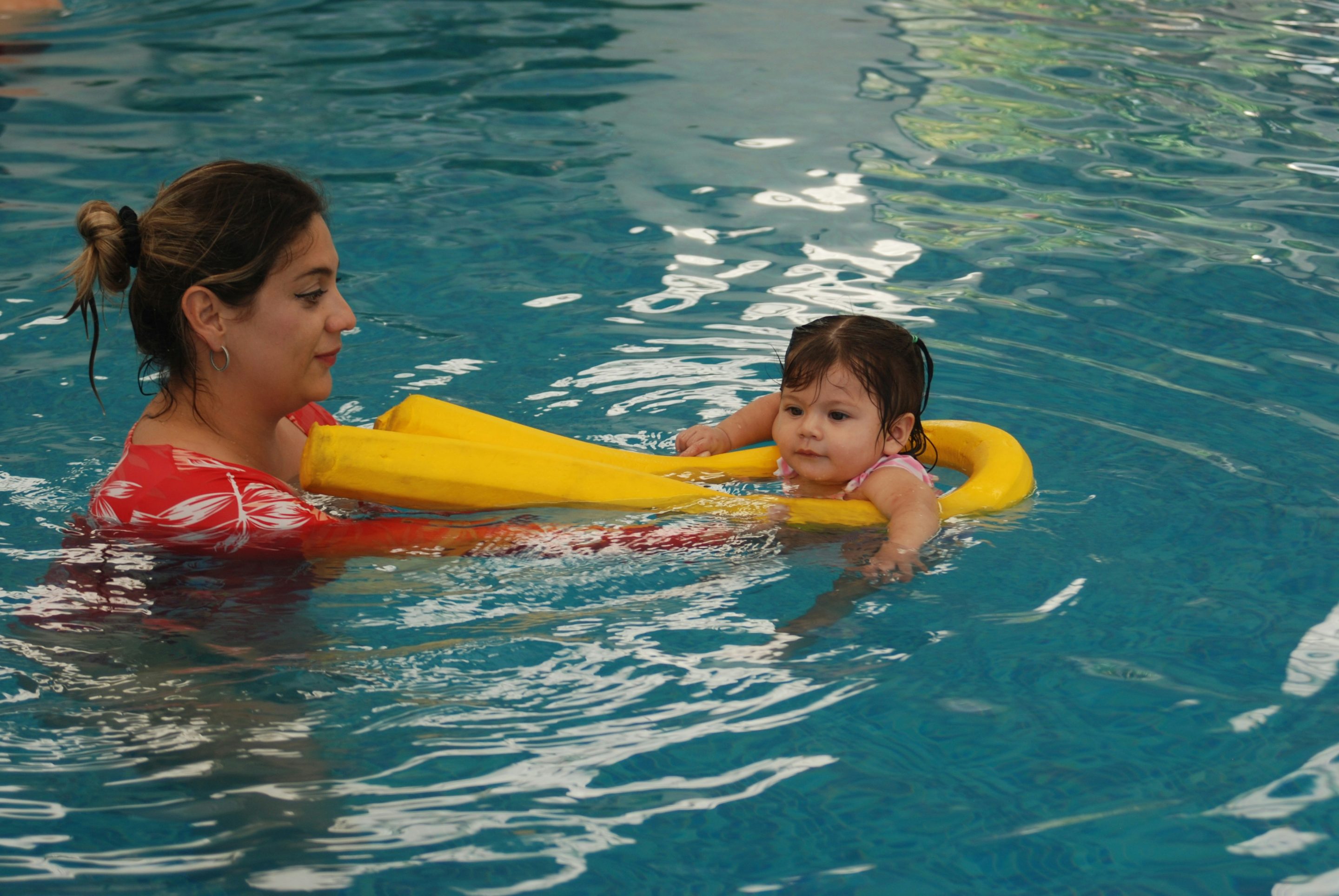
We offer a unique opportunity to introduce your baby to the water from an early age, supporting both sensory and developmental growth. Our programme, suitable from birth to one year, provides a calm and nurturing environment where you can bond with your baby as they explore the water and begin to build confidence.

One-to-One Lessons
1-to-1 lessons are designed for those who want or may need more individualised experience at Lancing College. It’s a fantastic way to help your child grow in confidence and enjoy their swimming journey.
Our 1-to-1 lessons follow the same learning pathway as our group sessions, but with a personalised touch. Each session is shaped around your child’s individual needs, helping them learn at their own pace in a relaxed, encouraging environment.
Holiday Courses
As well as our term-time learn to swim programme, Lancing College offers holiday courses during each School holiday. Our holiday courses are for children aged 3-11 of all abilities. Children learn in small groups with expert teachers in the water, creating a safe and encouraging atmosphere where confidence and skills grow.

Swim Stages
Stage One
This stage introduces children to swimming in a fun, supportive environment, building water confidence, basic movement skills, and safety awareness. They begin to adapt to a structured class setting, learning alongside others and progressing at their own pace with the support of flotation aids.
- Enter the water safely.
- Move forward for a distance of 5 metres, feet may be on or off the floor.
- Move backwards for a distance of 5 metres, feet may be on or off the floor.
- Move sideways for a distance of 5 metres, feet may be on or off the floor.
- Scoop the water and wash the face.
- Be comfortable with water showered from overhead.
- Move from a flat floating position on the back and return to standing.
- Move from a flat floating position on the front and return to standing.
- Push and glide in a flat position on the front from a wall.
- Push and glide in a flat position on the back from a wall.
- Give examples of two pool rules.
- Exit the water safely.
Stage Two
This stage builds water confidence, helping swimmers feel relaxed and in control. The focus is on confident breathing and becoming comfortable with the face in the water—key foundations for future progress. Swimmers also develop floating and basic safety skills, while improving their kicking to support more independent movement.
- Jump in from poolside safely.
- Blow bubbles a minimum of three times rhythmically, with nose and mouth submerged.
- Move from a flat floating position on the back and return to standing without support.
- Move from a flat floating position on the front and return to standing without support.
- Push from a wall and glide on the back – arms can be by the side or above the head.
- Push from a wall and glide on the front with arms extended.
- Travel using a recognised leg action with feet off the pool floor on the back for 5 metres, without the use of floatation equipment.
- Travel using a recognised leg action with feet off the pool floor on the front for 5 metres, without the use of floatation equipment.
- Perform a tuck to rotate from a flat floating position on the front, to a back floating position, then return to standing.
- Perform a tuck to rotate from a flat floating position on the back, to a front floating position, then return to standing.
- Perform a log roll from the back to the front.
- Perform a log roll from the front to the back.
- Exit the water without support.
Stage Three
Swimmers will build confidence with safe water entries, including going fully underwater, and travel up to 10 metres on both their front and back. Along the way, they’ll strengthen their water safety knowledge and develop dynamic rotation skills, helping them move with greater control and confidence in the water.
- Jump in from poolside and submerge.
- Sink, push away from wall and maintain a streamlined position.
- Push and glide on the front with arms extended and log roll onto the back.
- Push and glide on the back with arms extended and log roll onto the front.
- Travel 5 metres on the front, perform a tuck to rotate onto the back and return on the back.
- Fully submerge to pick up an object.
- Correctly identify three of the four key water safety messages.*
- Push and glide and travel 10 metres on the back.
- Push and glide and travel 10 metres on the front.
- Perform a tuck float and hold for three seconds.
- Exit the water without using steps.
*The Water Safety Code contains four key water safety messages:
- Stop and Think – Always swim in a safe place.
- Stay Together – Always swim with an adult.
- Float – If you fall in, float on your back, breathe, relax.
- Call 999 – If someone else in trouble;
- Call 999/112
- Tell the person to float on their back
- Throw them something that floats.
Stage Four
Learn to Swim Stage 4 supports swimmers in refining their leg kicks across all four strokes, while continuing to build strong push and glide skills and introducing sculling techniques.
By the end of this stage, swimmers will demonstrate clear, recognisable leg actions for each stroke, showing improved control, coordination, and confidence in the water.
By completing the Learn to Swim Stage 4 Award, swimmers will be able to:
- Perform a sequence of changing shapes (minimum of three) whilst floating on the surface and demonstrate an understanding of floating.
- Push and glide from the wall towards the pool floor.
- Kick 10 metres backstroke (one item of equipment optional).
- Kick 10 metres front crawl (one item of equipment optional).
- Kick 10 metres butterfly on the front or on the back.
- Kick 10 metres breaststroke on the front (one item of equipment optional).
- Perform a head first sculling action for 5 metres in a flat position on the back.
- Travel on back and log roll in one continuous movement onto front.
- Travel on front and log roll in one continuous movement onto back.
- Push and glide and swim 10 metres, choice of stroke is optional.
Stage Five
Stage 5 builds on existing skills, introducing treading water, refining arm pulls across all four strokes, and developing confidence with movements such as handstands and somersaults.
The focus is on strengthening technique and combining all elements of each stroke, progressing earlier skills with greater control, coordination, and confidence.
Learn to Swim Stage 5 Outcomes
By completing the Learn to Swim Stage 5 Award, swimmers will be able to:
- Perform a flat stationary scull on the back.
- Perform a feet first sculling action for 5 metres in a flat position on the back.
- Perform a sculling sequence with a partner for 30-45 seconds to include a rotation.
- Tread water for 30 seconds.
- Perform three different shaped jumps into deep water.
- Push and glide and swim 10 metres backstroke (performed to Swim England expected standards).
- Push and glide and swim 10 metres front crawl (performed to Swim England expected standards).
- Push and glide and swim 10 metres breaststroke (performed to Swim England expected standards).
- Push and glide and swim 10 metres butterfly (performed to Swim England expected standards).
- Perform a handstand and hold for a minimum of three seconds.
- Perform a forward somersault.
- Demonstrate an action for getting help.
Stage Six
Stage 6 prepares swimmers for exercise, refining technique across all four strokes and developing surface dives.
Focus remains on coordination, breathing control, and water safety, with improved streamlining and stronger arm and leg actions for greater consistency, control, and confidence.
Learn to Swim Stage 6 Outcomes
By completing the Learn to Swim Stage 6 Award, swimmers will be able to:
- Give two examples of how to prepare for exercise and understand why it is important.
- Sink, push off on side from the wall, glide, kick and rotate into backstroke.
- Sink, push off on side from the wall, glide, kick and rotate into front crawl.
- Swim 10 metres wearing clothes.
- Push and glide and swim front crawl to include at least six rhythmical breaths.
- Push and glide and swim breaststroke to include at least six rhythmical breaths.
- Push and glide and swim butterfly to include at least three rhythmical breaths.
- Push and glide and swim backstroke to include at least six regular breaths.
- Push and glide and swim 25 metres, choice of stroke is optional (performed to Swim England expected standards).
- Perform a ‘shout and signal’ rescue.
- Perform a surface dive.
Stage Seven
Learn to Swim Stage 7 Outcomes
Stage 7 develops all four strokes, building stamina, refining diving, and sustaining strong technique over distances of up to 100 metres.
Swimmers link skills from all stages into smooth, controlled routines, complete an obstacle course demonstrating versatility, and meet Swim England standards: 25 metres of each stroke and a continuous 100-metre swim using three strokes.
By completing the Learn to Swim Stage 7 Award, swimmers will be able to:
- Push and glide and swim 25 metres backstroke (performed to Swim England expected standards).
- Push and glide and swim 25 metres front crawl (performed to Swim England expected standards).
- Push and glide and swim 25 metres breaststroke (performed to Swim England expected standards).
- Push and glide and swim 25 metres butterfly (performed to Swim England expected standards).
- Perform a movement sequence (linking skills with strokes and sculls) of one minute duration, in a group of three or more, incorporating a number of the following skills:
Sculling: head first, feet first
Rotation: forward or backward somersault, log roll
Floating: star on the front or on the back, tuck float, create own
Eggbeater: Moving, lifting one or both arms out of the water - Perform a sitting dive or dive.
- Push and glide and swim 50 metres continuously using one stroke (performed to Swim England expected standards).
- Push and glide and swim 100 metres, using a minimum of three different strokes (performed to Swim England expected standards).
- Tread water using eggbeater action for 30 seconds.
- Complete an obstacle course (using minimum of four objects) with feet off the pool floor throughout.
Frequently Asked Questions
Do you have one-to-one lessons?
We currently have a limited number of one-to-one swimming lessons.
How can I contact you?
The best way to get in touch is by filling out the contact us form.
Do you offer intensive courses or additional lessons in school holidays?
We currently run intensive courses and one-to-one lessons for 3-11 year olds in half terms.
What is the size of the swimming pool?
Our pool is 25 metres long by 9 metres wide and 1 metre to 1.5 metres deep.
What changing facilities are available?
We offer modern, child-friendly changing facilities designed as single-sex changing villages, creating a comfortable and secure environment for all swimmers. Baby changing facilities are also available for our younger families.
Showers are provided for use before and after lessons, along with well-equipped vanity areas and hairdryers, ensuring a convenient and enjoyable experience for everyone.
Can we watch lessons?
Our spectator area offers a clear view of your child’s lesson, allowing you to relax while they learn. You can also enjoy a coffee from reception or make the most of our free Wi-Fi to catch up online during your visit.
How many adults can get in the pool during baby swim lessons?
For our baby swimming sessions (ages 0–3), parents and carers take an active role in the water, supporting their child’s early development and building confidence together. We ask only that one parent or carer enters the water with each child.
For children aged 3 and above in our learn-to-swim programme, parents are invited to relax in the spectator area, where they can watch lessons in progress. Refreshments are available, along with free Wi-Fi for added convenience during your visit.
Where can I find you?
You can find us here at Lancing College, BN15 0RW. As you come up the drive, follow signs to ‘Main car park’. Once parked, walk past the sports hall and you’ll find the swimming pool entrance on the left.
Do parents get in the water?
Parents participate in the lessons for baby swim ages 0-3. For children aged 3 and upwards on our learn to swim programmes, parents can relax in the spectator area with refreshments available and free WiFi.
We’ve been incredibly impressed with the swimming lessons at Lancing College. The instructors are professional, encouraging, and genuinely care about each child’s progress. The pool facilities are excellent, and our child has grown in confidence and ability week by week.