

History of the College
Please enjoy reading about the formation and history of the College, the grounds and the Chapel. This timeline is a work in progress, so if you have photographs you think it would be nice to include, or suggestions of key dates we might have missed, please email the Foundation Office on foundation@lancing.org.uk
We would like to thank Lesley Edwards, Lancing College Archivist for providing the photographs on display in this timeline, most of which have been sourced from the Lancing College Digital Archives.
11 January 1847
St Mary’s School is opened in Shoreham.
1 March 1848
Nathaniel Woodard, the founder of Lancing College and the Woodard Corporation, publishes ‘A plea for the middle classes’.

1 August 1848
The first Master and the boys of St. Nicolas’ School – as it was formerly known – officially met together in the new Shoreham Church, where the school would be based for the next nine years.
August 1848
Henry Jacobs is named the first Head Master.
1848
R C Carpenter begins designing the College buildings.
1849
The schools combine to form the College of SS Mary and Nicolas.
1850
Football begins to be played at the College. At the time, Lancing played by different rules than many other schools, and is rumoured to have been instrumental in the formation of the modern rules of Football. 1851 John Branthwaite becomes Head Master (1851–1859).

1851
John Branthwaite becomes Head Master (1851–1859).
1853
Lancing introduces the earliest scholarships: the Tritton and Branthwaite Scholarships.
21 March 1854
St Benedict’s Day: Nathaniel Woodard, the Masters and the boys walk up to Lancing Hill to lay the first stone of the new College buildings at Burwells Farm (located at the base of the central buttress on the western side of the Lower Quad).
1857
The Foundation of Lancing Cricket: The earliest matches recorded are against Hurst and Brighton Grammar School, led by captain and son of the founder, G Woodard.
30 June 1857
Official ceremony for the occupation of the new school grounds. By August 1857 the Upper School is moved, followed by the Lower School in March 1858.
30 June 1857
Head’s House and School House are formed.
15 July 1857
School House is opened by Nathaniel Woodard.
1862
Dr Robert Edward Sanderson becomes Head Master (1862–1889).

1862
Drama is introduced at the College.
1863
The Revd Edmund Field becomes Chaplain (1863–1892).

1864
Foundation of the Debating Society.
1865
William Russell becomes Head of Music (1865–1868). 1866 School House (now the Dining Hall) is completed.
1866
School House (now the Dining Hall) is completed.

28 July 1868
The Foundation Stone of the Chapel is laid and building commences.

1873
The Sussex Pad is purchased (the first time).
1875
The Crypt is dedicated for use as the school chapel. It will be used as the chapel until 1911.
1877
The tennis courts are levelled; tennis starts to be played at the College.
1877
A Musical Society is formed, as well as a Madrigal Society and a Symphonic Society.
1877
The Shakespeare Society is formed and named "These Mortalsby Players"
1877
The Lancing College Magazine is first published.

1878
The Lancing Club is founded.
1878
The Gymnasium is built (now part of the Theatre).
15 June 1881
Official opening of Great School (under the old name of School Room) kindly donated by Henry Martin Gibbs. The opening was accompanied by a public exhibition of all sorts of talents of staff and pupils.

1885
Chapel begins to take shape.
1889
Harry Ward McKenzie becomes Head Master (1889–1894).

25 April 1891
Death of the founder, Nathaniel Woodard.
1894
Pupils begin building the old swimming pool (now the Theatre).
1895
Ambrose J Wilson becomes Head Master (1895–1901).

1897
The first Five Mile run, beginning the long tradition.
1898
Arthur Lyttelton becomes Provost.
1899
The College's Golden Jubilee is the first ever service in the unfinished Upper Chapel.
1901
Bernard Henry Tower OL becomes Head Master (1901–1909).

1905
Officers' Training Corp is formed (now CCF) by Allan Haig-Brown.
1908
Science Labs are built under the guidance of Billy Woodard.
1909
Canon Henry Thomas Bowlby becomes Head Master (1909–1925).

1913
Completion of the Upper Quad.
1913
Gibbs’ House is formed, named after Henry Martin Gibbs.
1913
News House becomes Sanderson’s House.
1914
The organ is installed in the Chapel and building ceases.

25 June 1921
The Foundation Stone of the Cloister is laid in memory of those who died in the First World War.
1921-1934
Manor House is converted from the original Lancing Manor.
1925
Cuthbert Harold Blakiston becomes Head Master (1925–1934).
1927
The official opening of the New Block of classrooms.
1928
The Head Master’s House is built at the front of the College. It will later become Teme House.

1935
Frank Cecil Doherty becomes Head Master (1935–1953).
1936
‘Parity of esteem’ between subjects is established.
1940s
The College is evacuated to Teme Valley, Shropshire. The naval training establishment HMS King Alfred occupies the College.
1941
Churchill meets with General Montgomery for the first time, at Lancing.
1941
Lancing welcomes the first female member of the Common Room, Dr Barbara Russell-Wells.
1947
Teme House is introduced in what was originally built to be the Head Master’s House.
23 July 1948
Centenary Service with a performance of St Nicolas Cantata by Benjamin Britten.
1953
John Christopher Dancy becomes Head Master (1953–1961).

1954
The Crypt Art School is formed (succeeded by the Reeve Art School in 2008).
1960
The open air theatre is opened by Agatha Christie.
1961
Sir Erskine William Gladstone Bt., KG becomes Head Master (1961–1969).

1966
The Music School is opened by Yehudi Menuhin.
1968
The Centenary of the Chapel is celebrated.
1969
Ian David Stafford Beer becomes Head Master (1969–1981).
1970
Co-education is introduced with the first girls admitted to the Sixth Form.
1973
Sankey’s House is formed for Sixth Form boys. It became a girls’ day House in 2006.
1975
The Sports Hall is erected.
1977
The Chapel's rose window is completed, designed by Stephen Dykes Bower.

13 May 1978
Dedication of the Chapel's west wall and rose window by the Archbishop of Canterbury.
13 May 1978
Manor House, the first purpose-built girls’ boarding house, is completed and opened by HRH Prince Charles.
1981
James Stephen Woodhouse becomes Head Master (1981–1993).
1981
The new Swimming Pool is built.
1982
Lancing's first expedition to Malawi.
1984
The Theatre is opened by Sir Tim Rice OL.
1986
Handford House is officially opened as a girls’ boarding house by the Duchess of Norfolk.
1986
The Walker organ is installed in the Chapel, by Carlo Curley.
1987
he great storm of '87 hits the College.
1990s
Day pupil numbers are allowed to increase to nearly 50%.
1993
Christopher John Saunders becomes Head Master (1993–1998).

1993
The new Design and Technology centre is opened.

19 May 1998
150th Anniversary celebrations, attended by the Princess Royal.
1998
Peter Tinniswood becomes Head Master (1998–2005).

2002
Lancing Preparatory School at Hove joins the Lancing family.
2002
Field’s House becomes a girls' boarding House.
2002
Head’s House becomes a boys' day House.
2005
Richard Biggs steps in as Acting Head Master (2005–2006).
2006
Sankey's House becomes a girls' day House.
2006
Jonathan Gillespie FRSA becomes Head Master (2006–2014).

2007
The Huddleston Window is dedicated by Archbishop Desmund Tutu, named for anti-apartheid activist Bishop Trevor Huddleston OL.

2014
Lancing Preparatory School at Worthing joins the Lancing family.

2014
Dominic Oliver becomes Head Master (2014–2025).

8 June 2017
Lancing College Equestrian Centre is opened by Harry Meade, son of Richard Meade OL.
September 2018
Saints', Lancing's first co-educational day House, opens.

7 October 2018
Nana Addo Dankwa Akufo-Addo, current President of the Republic of Ghana and former pupil, visits the College.

September 2019
Campaign for the completion of the Chapel starts

November 2019
The College's Foundationers Campaign – aiming to raise £3 million to support young people from disadvantaged backgrounds – celebrates its two year anniversary.
December 2020
By December 2020 the appeal target – the final £350,000 of a total price of £1.2 million – was reached.

2019–2021
Construction on the west porch progresses between 2019 and 2021, when the 'topping out' stone is placed on the northern buttress of the west porch.

April 2022
The completed west porch is dedicated on 23 April 2022.
2023-2024
The College celebrates its 175th anniversary
2024
The College opens Fives Café. With its unique historical charm, Fives is a modern gathering spot for pupils and staff.

2024
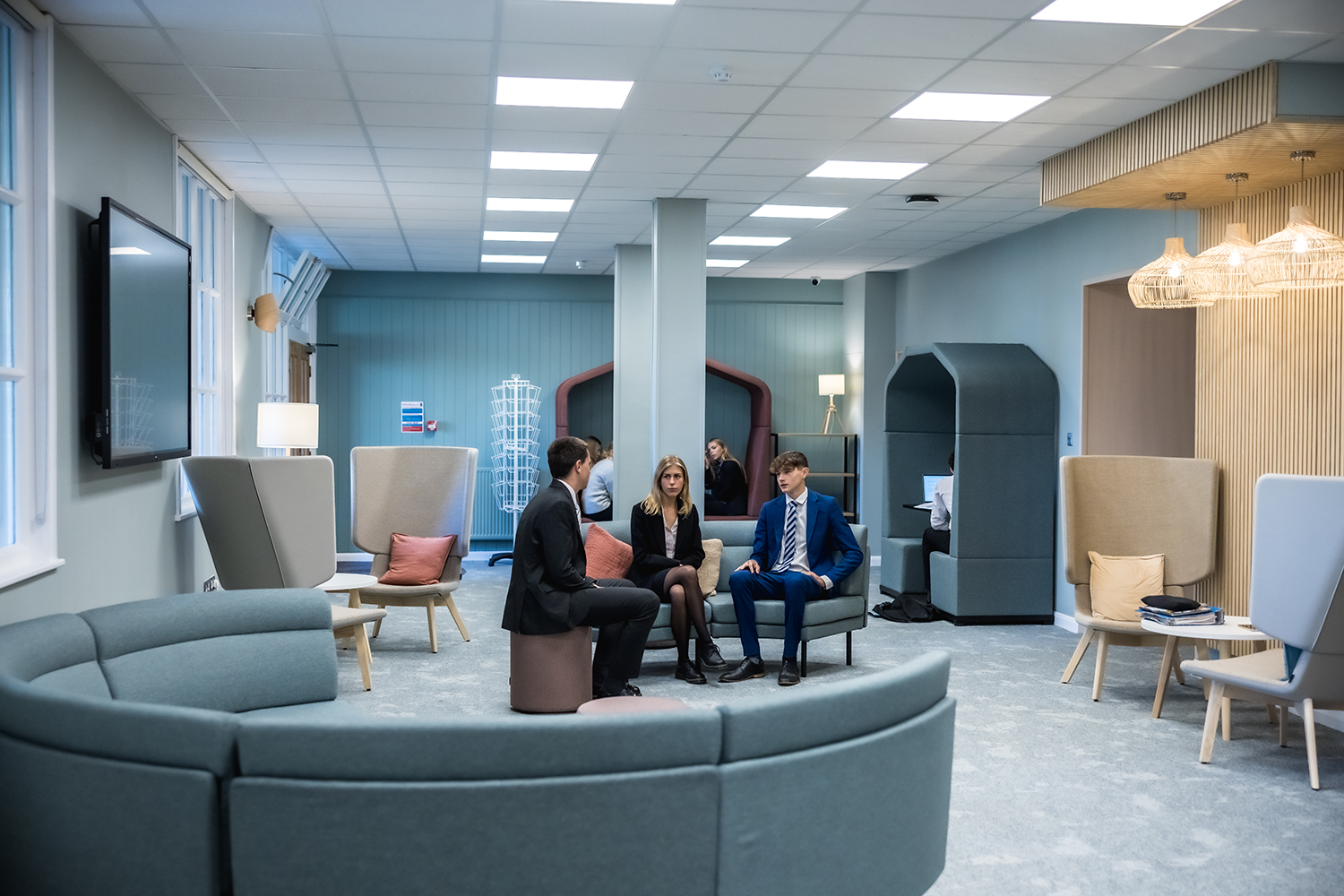
A new Sixth Form Centre opens in the heart of the school in the Lower Quad
2025
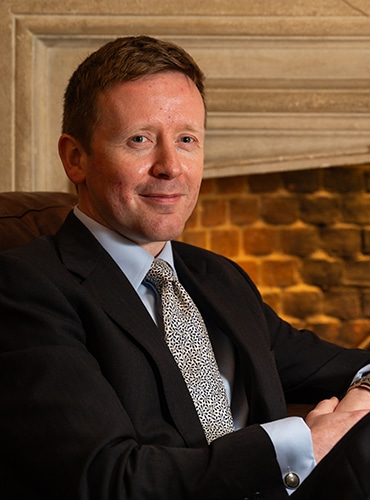
Dr Scott Crawford becomes Head Master (2025–present)
Admissions
Start your journey
Tours and Opendays