

- Academic Enrichment
- Admissions
- Art
- Campaign
- CCF
- Chapel
- Chemistry
- Classics
- Co-curricular
- Community
- Dance
- Design and Technology
- Drama
- Duke of Edinburgh
- Economics
- English
- Equestrian
- Farm
- Foundation
- General
- Geography
- History
- Houses
- Library
- Mathematics
- Modern Foreign Languages
- Music
- OLs
- Outreach
- Photography
- Science
- Scouts
- Sport
- Sports
- Trips and Visits
- UCAS/Careers
Lower Sixth Trip to CERN
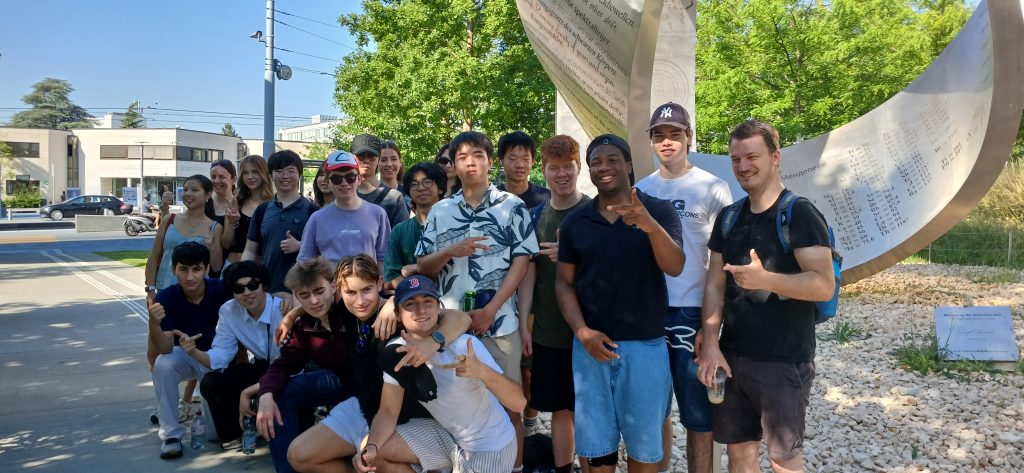
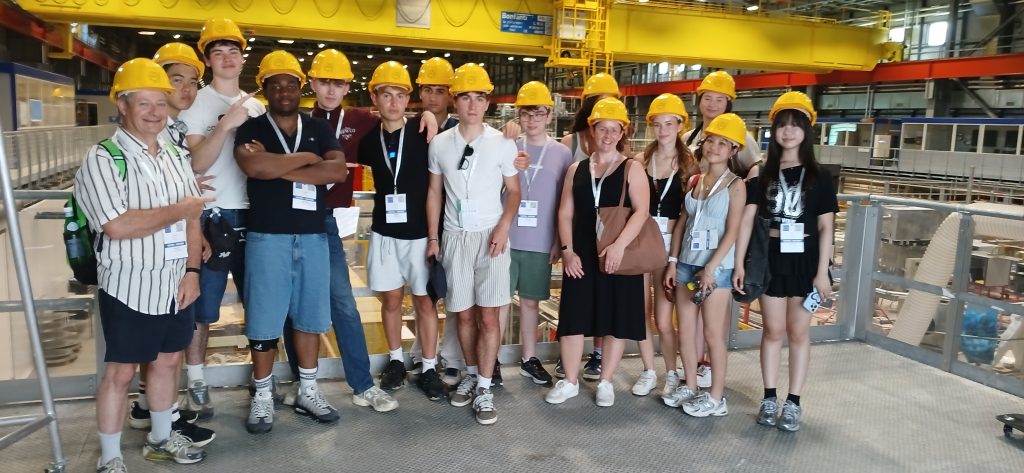
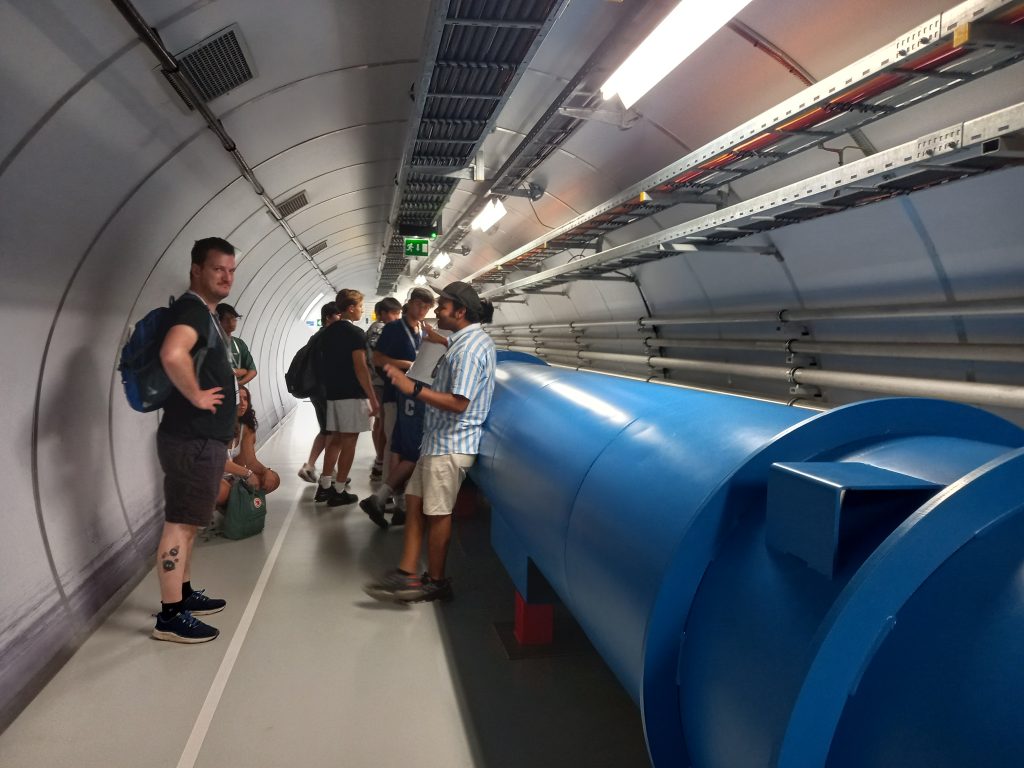


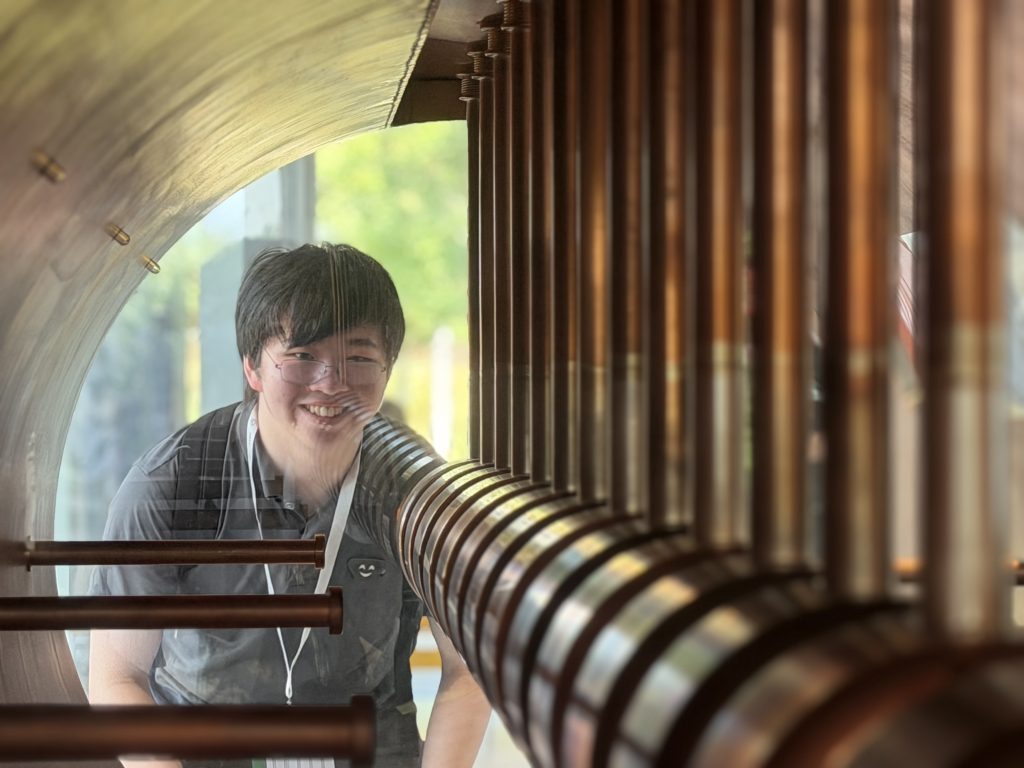
At the end of the Summer Term, 19 Lower Sixth students travelled to Geneva to visit CERN and learn about the Large Hadron Collider. In a rather literal case of ‘out of the frying pan, into the fire’, we escaped a 30-degree British heatwave into a 35-degree Swiss one.
We were assaulted by a wave of heat as we left the aeroplane. After settling in and a short walk to the lake, we headed by tram to bowling and ‘pizza by the mile’. Well, four pizzas over a metre in length each. Mr Collins is convinced that bowling is a great way for physicists to understand quantum particle properties such as spin, momentum and the transfer of kinetic during impact. Everyone improved their scores in the second bowling game with several people scoring strikes and a total of over 100. After an evening of camaraderie, we woke up early the next morning, had breakfast and then headed off to CERN.
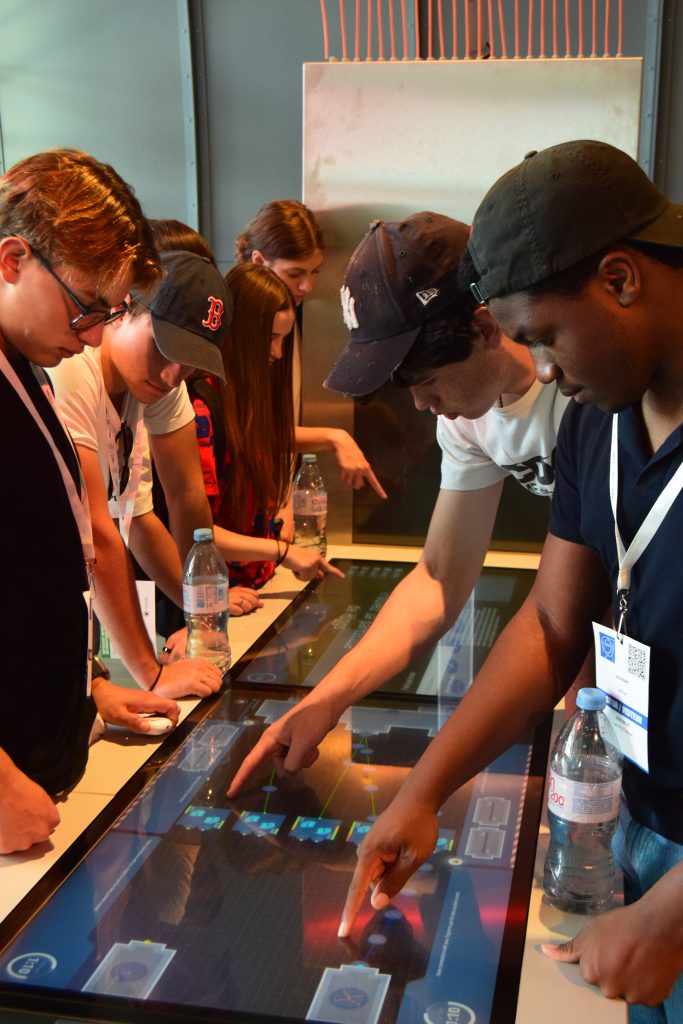
During the morning, we visited the exhibits. There we learned about the intricate detectors that generate petabytes of data during collisions, the engineering of the beam pipe, the formation of stars, the structure of the universe and a crash course in how quantum mechanics affects day to day life. There was also a fascinating lecture with demonstrations on the properties of superconductors and liquid nitrogen.
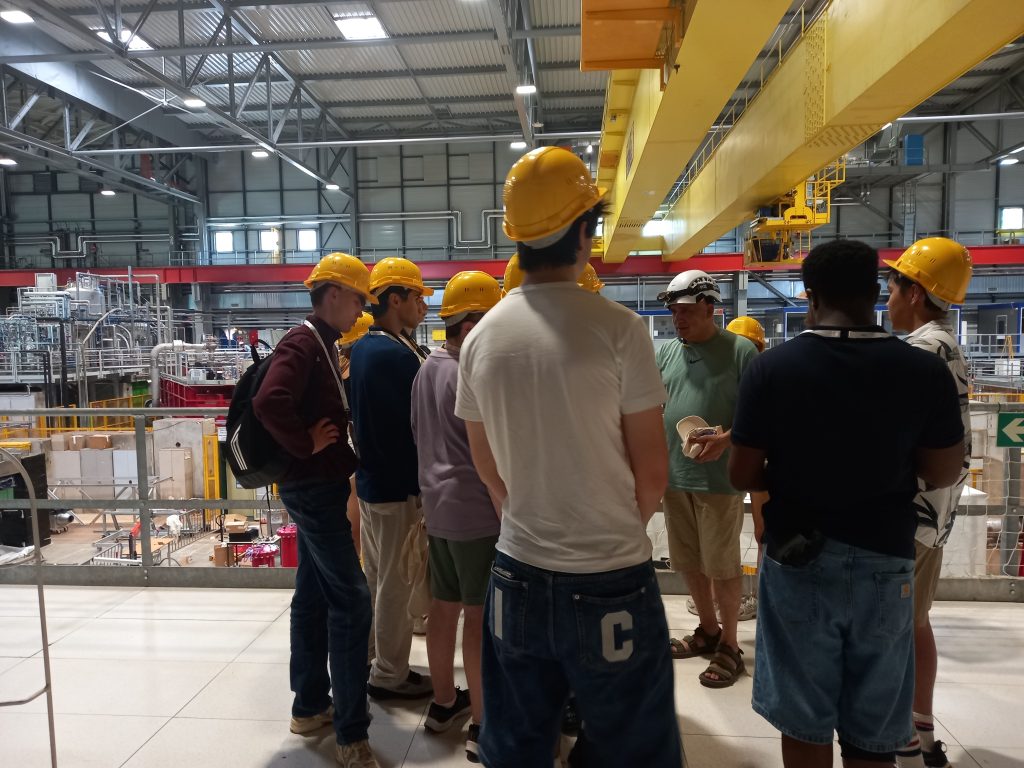
After lunch, we went for our tour of the Neutrino Platform and cryogenics facilities. At the neutrino platform, they were developing a prototype detector for the Deep Underground Neutrino Experiment (DUNE) to detect neutrinos. Our guide explained how measuring the mass of the neutrino necessitated the new detector they are building. The lab that will house it is 1.5km below ground and will eventually hold detectors with 70,000 tonnes of liquid argon. The neutrinos are produced in large quantities by directing protons away from the main LHC beam into a graphite target. Neutrinos in the flux continuously change flavour as they travel, muon neutrinos that can decay into detectable charged muons.
Next, we went to the cryogenics lab, where we were shown a model of the beam pipe. Apparently, it would take 5 million household fridges to cool the entire LHC beam pipe. This cooling allows the niobium-titanium electromagnets to superconduct (meaning they have no resistance), which decreases the power consumption drastically. It does, however, pose several engineering challenges; the 27 km ring shrinks by 80 m when cooled and has to have concertinaed sections to allow for this contraction. This was altogether a cooler experience as it was in a room with air conditioning. Spin is a quantum mechanical property that many of us want to delve more deeply into.
We then headed out to the Edelweiss restaurant for dinner. There was a starter of fondue, followed by Bratwurst and chips, and then finished with ice cream. This was accompanied by some traditional Swiss music, including yodelling, the accordion, and an alpine horn, which was so long it had to be played from upstairs.
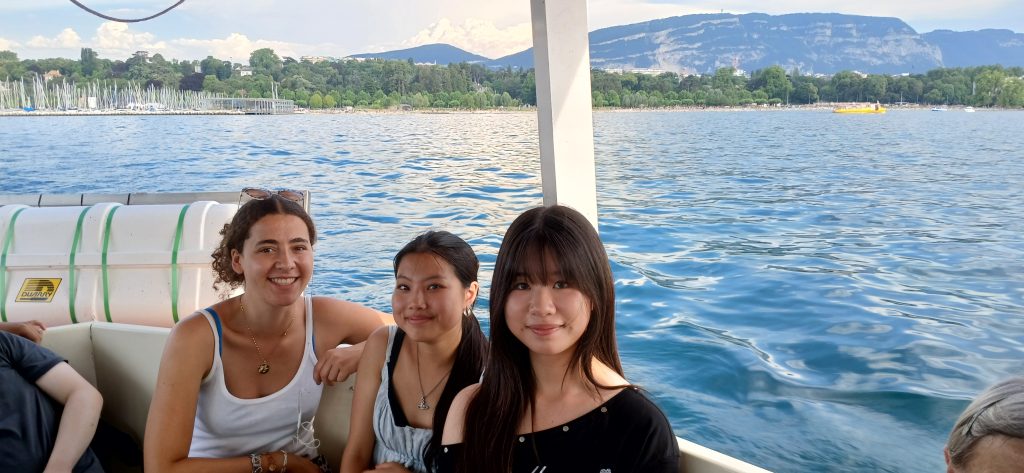
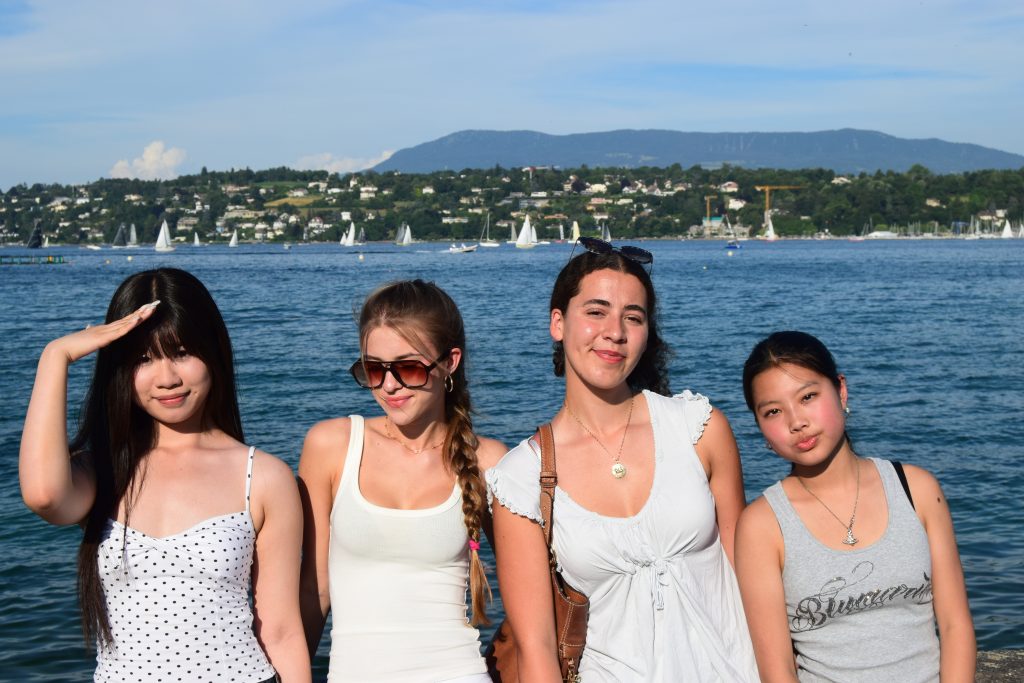
The next day, we first tasted chocolate from the oldest chocolate shop in Geneva. This was followed by free time, which included sushi, ice cream, a fish, cathedrals, and the Jet d’Eau de Genève. Then, a boat tour of the lake, where we took in the sights of the less urban north-east of the lake.
The trip ended via the lovely, air-conditioned Geneva airport and a flight home that was effectively only 15 minutes (because of time zones), just in time for the British heatwave to hit its peak.
Jethro S
Lower Sixth