

- Academic Enrichment
- Admissions
- Art
- Campaign
- CCF
- Chapel
- Chemistry
- Classics
- Co-curricular
- Community
- Dance
- Design and Technology
- Drama
- Duke of Edinburgh
- Economics
- English
- Equestrian
- Farm
- General
- Geography
- History
- Houses
- Library
- Mathematics
- Modern Foreign Languages
- Music
- OLs
- Outreach
- Photography
- Science
- Scouts
- Sports
- Trips and Visits
- UCAS/Careers
A Level Geography Students Travel to Barcelona


Geography is a real-world subject, and the best way to learn it is to get out and immerse yourselves in places and environments! At Lancing College, the A Level field trip to Barcelona is the culmination of a field trip journey that begins in the Third Form, where students study the local area of Shoreham. At GCSE, students visit some of the most interesting locations in the UK, such as the ever-changing environment of East London (after the 2012 Olympic Games) and the rugged beauty of the post-glacial uplands of North Wales.
At A Level, the students’ horizons are broadened—quite literally—as we take them for four days of fieldwork to Spain.
This year’s Lower Sixth cohort of Geographers flew out to Barcelona in February. After an early flight, the first day was about developing a sense of place and locating the various features of the city, such as the Sagrada Familia, 1992 Olympic Park (giving the students a great opportunity to contrast the place with the London Olympic Park), the Port, and main tourist areas. We even managed a quick stop-off at Camp Nou stadium!
The work really began when we headed back into Barcelona to visit the Raval area. Students collected a range of data across four sites to assess the success of the various strategies to rebrand and redevelop this part of the city. Against a backdrop of Catalan independence, flagship developments that were supposed to kick-start a wave of investment, and a local population that remained largely unaffected by the changes, students surveyed the narrow, dingy backstreets. In the evening, the students drew graphs, analysed the data, and began to make sense of their findings.
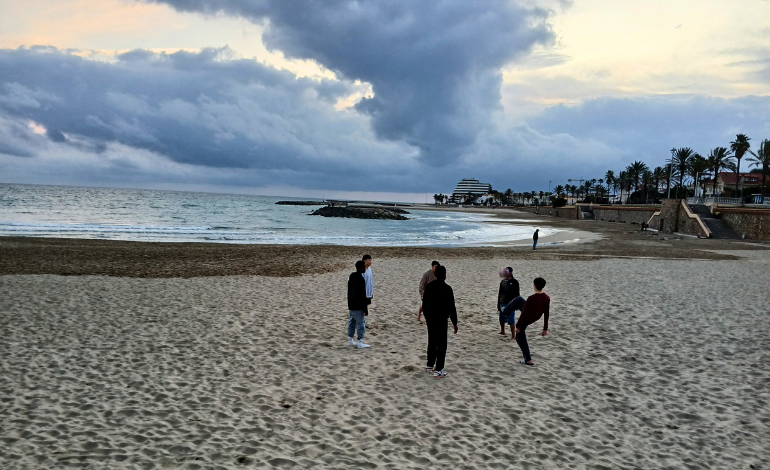
The next day focused on physical geography in the resort of Sitges, which was our home for the trip. Students compared two sections of beach—one in front of the million-euro residential and tourist developments, and the other around the headland, which has been neglected and thus eroded by the action of the waves. Students measured pebbles, profiled beaches, identified and analysed the various management techniques, and again in the evening used the data to discuss processes shaping the environment, such as longshore drift.
The final day saw a trip into the rural Priorat region, which has seen changes caused by climate change, the buying up of second homes (in a process dubbed AirBnBification!), and lack of jobs. Yet, as the students saw, many of the small villages have seen a surge in employment from the wine industry. Students surveyed land use, carried out dereliction and environmental quality surveys, and made sense of the changing landscape.
Back at school, the students continued to analyse their data and draw conclusions. The whole trip has set them up well for their own fieldwork, the write-up of which contributes 20% to their final Geography A Level grade.
I really enjoyed it even though we worked really hard – I now feel ready to tackle my A Level coursework.
Romily TJ, Lower Sixth
It was fun and useful at the same time.
Oscar B, Lower Sixth
It was great fun and I learnt a lot – it will be really beneficial when it comes to writing my NEA!
Loui G, Lower Sixth