

- Academic Enrichment
- Admissions
- Art
- Campaign
- CCF
- Chapel
- Chemistry
- Classics
- Co-curricular
- Community
- Dance
- Design and Technology
- Drama
- Duke of Edinburgh
- Economics
- English
- Equestrian
- Farm
- Foundation
- General
- Geography
- History
- Houses
- Library
- Mathematics
- Modern Foreign Languages
- Music
- OLs
- Outreach
- Photography
- Science
- Scouts
- Sport
- Sports
- Trips and Visits
- UCAS/Careers
Lower Sixth trip to Battle
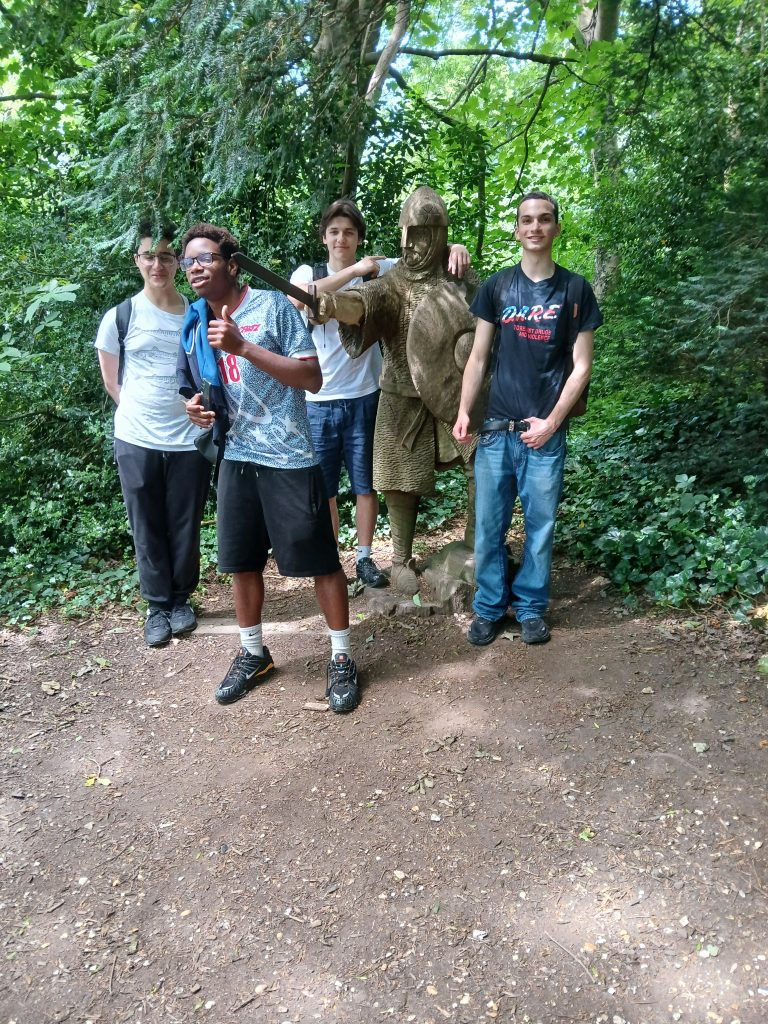


On 16 June, the Lower Sixth medieval historians travelled to Pevensey Castle and Battle Abbey, two of the most significant sites associated with William the Conqueror’s victory in 1066.
Shortly after his arrival in England, William established temporary defences at Pevensey within the ruins of a Roman fort. In the centuries that followed, a formidable medieval castle was constructed within its walls. During the visit, students explored the towers and dungeon, as well as an exhibition examining the castle’s varied roles throughout its long history. As Isaac Hussey observed, ‘It’s certainly a noble fort – one that could not fail to impress.’
The group then continued to Battle Abbey. William ordered the abbey’s construction on the site traditionally believed to be where King Harold Godwinson fell during the Battle of Hastings, as an act of penance for the bloodshed of the Norman Conquest. The abbey flourished as a Benedictine monastery for more than 400 years before its dissolution in 1538, after which the abbot’s lodgings were transformed into an impressive country house.
At the Visitor Centre, students explored a range of interactive displays, including a video re-enactment of the Battle of Hastings, before following the battlefield trail in glorious summer weather. They toured the abbey ruins and climbed to the top of the gatehouse to enjoy panoramic views of the surrounding landscape. Inside, an exhibition brought to life the stories of the abbey and the people who lived and worked there over the centuries.
Reflecting on the day, Lottie Freyman said: ‘It was great. Being able to walk on the battlefield itself was amazing. I loved the statues along the battlefield that looked like giant chess pieces and the abbey ruins. You can almost imagine what it was like… and I found a snake.’
Overall, the trip was both an enjoyable and highly valuable experience. Having such remarkable historic sites on our doorstep is a privilege, and the opportunity to engage directly with these locations brought the events of 1066 vividly to life. The visit deepened students’ understanding of a pivotal moment in English history and provided knowledge and inspiration that they can take forward into their classroom studies and wider reading.
Dr Elizabeth Keane
Head of Politics