

Maths students head to New York City
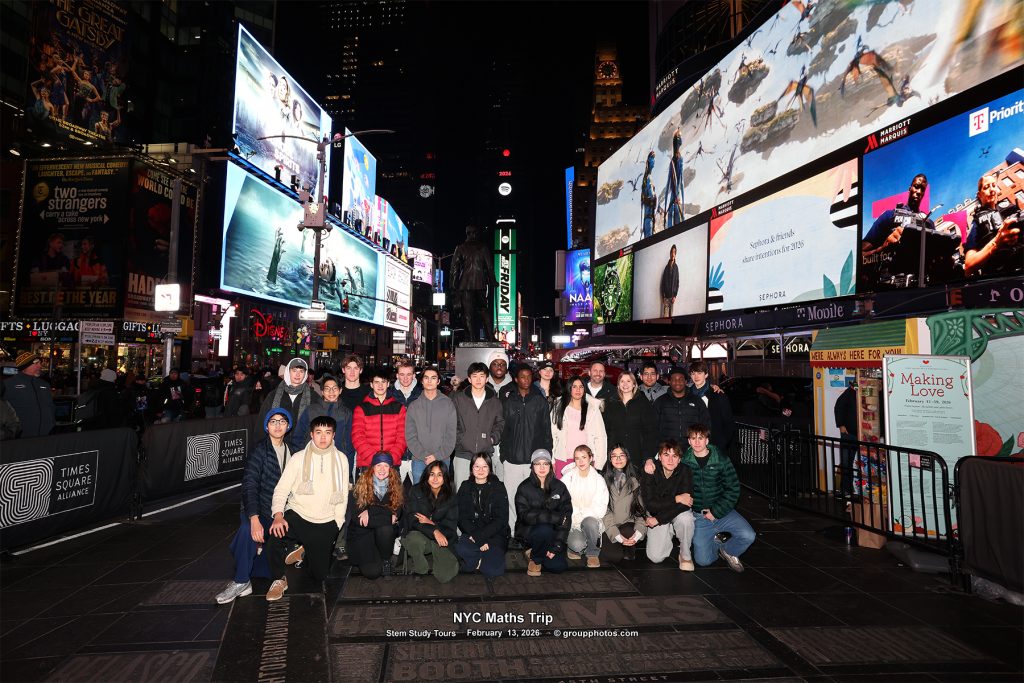
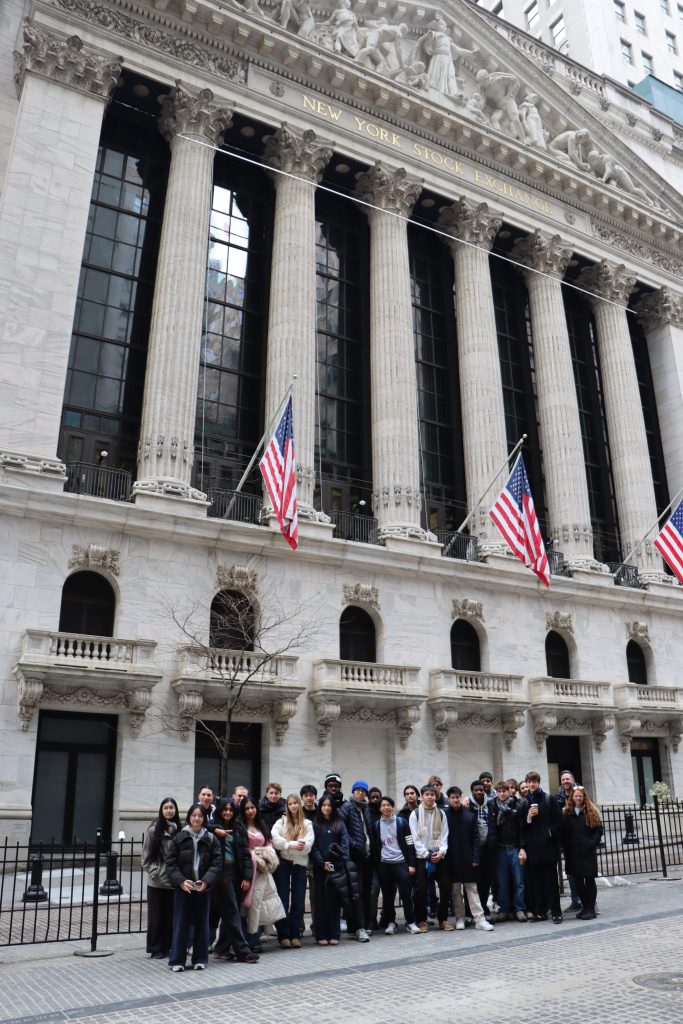

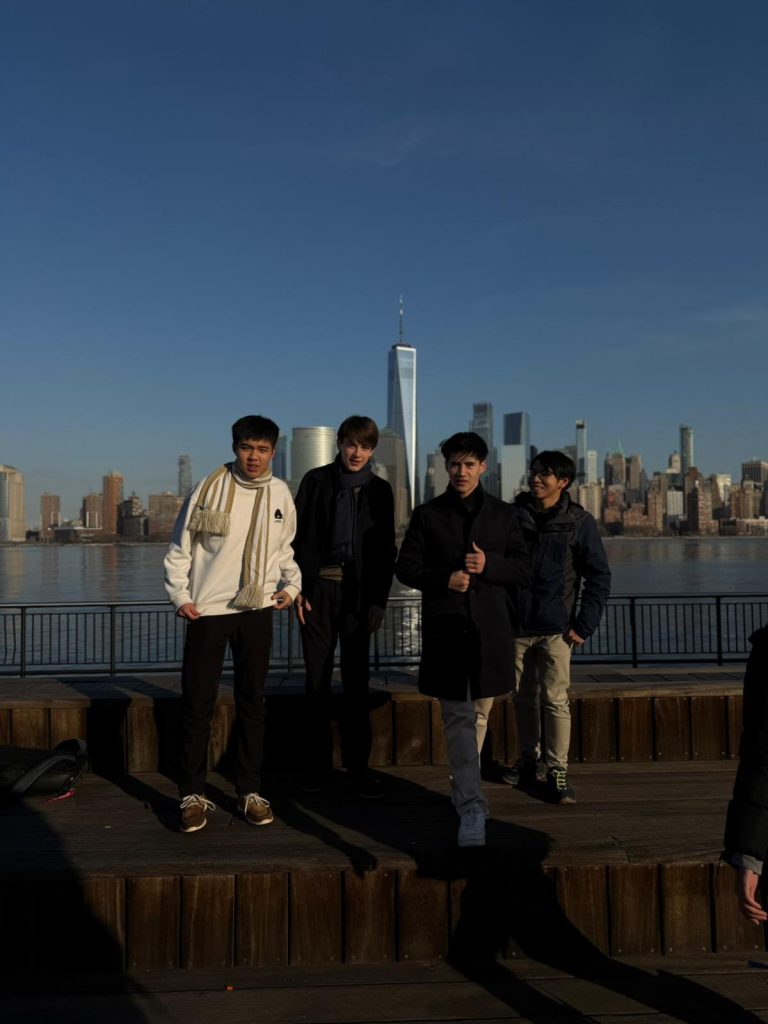
Our recent maths trip to New York City was an unforgettable experience, combining the excitement of travel with the real-world application of mathematical ideas. From exploring iconic landmarks to analysing patterns, structures, and data in a bustling urban environment, students had the opportunity to see how maths extends far beyond the classroom.
Below, our students share their personal highlights and reviews of the places we visited, offering their own insights into how New York City became a classroom like no other.
9/11
On entering the 9/11 Museum, I was overcome by a sense of the gravity and the importance that the event had on the city of New York. An event which fundamentally changed both the American identity and its understanding of its place in the world.
Where previously it had seen itself as a bastion of Western idealism, the events that unfolded on that day demonstrated to itself and the world that the force of hatred had the ability to disrupt and shatter the supposed imperviousness of the West.
However, this fear that gripped America in the years following 9/11 was not the lasting effect of the museum. Rather, it was the resounding optimism in the face of evil that struck me so greatly. I was particularly moved by the art created by schoolchildren, demonstrating the hope, joy and love that emanated from the response to the attack. One drawing of a child’s father who had been lost made me think about all the other fathers, sons, and grandfathers who had lost their lives, many for the sake of saving others.
Another story that has stuck with me is that of a woman who, before jumping to her death, held down her skirt. Even in death, New Yorkers held onto their dignity, their values and their humanity – an example of how even the most atrocious events of evil cannot strip us of our human resolve.
Now, in a time of political radicalisation and war, the disparity between creed, culture and people seems its most evident; however, the events of 9/11 teach us that the hate which fractures is never as strong as the love that binds. It is this sense of love which permeates throughout the museum and permeates through the city of New York.
By Harlan E
Intrepid
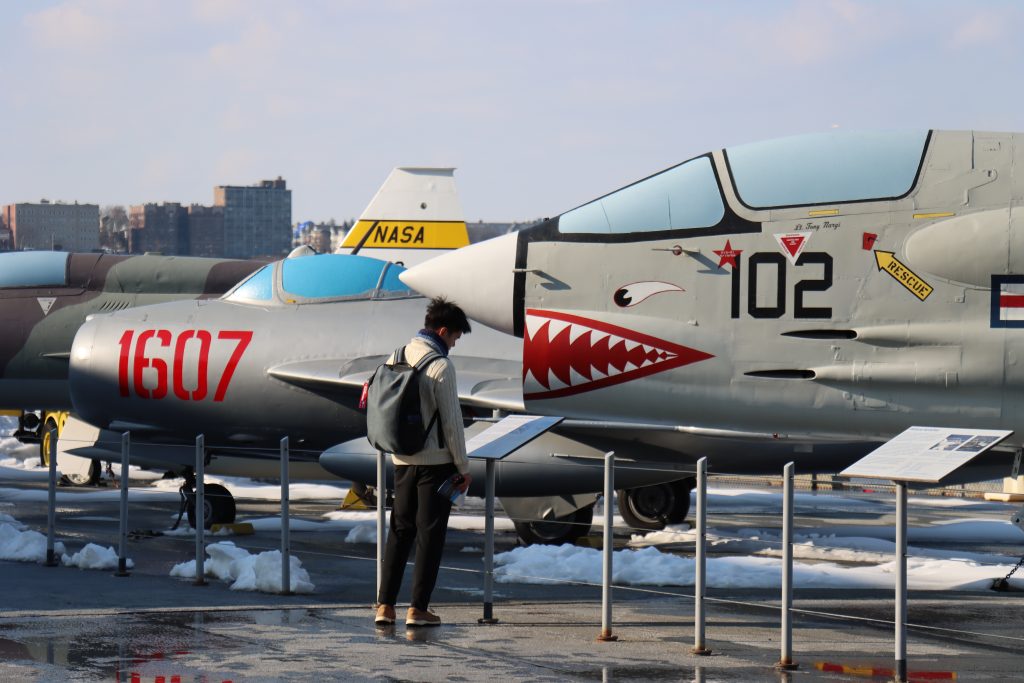
After visiting the 9/11 Memorial, we went to the Intrepid Museum on the Hudson River on Saturday afternoon. The museum consists of an Essex-class aircraft carrier that was built in the middle of World War II (1943). On board, numerous different classes of aircraft were displayed, and life on an aircraft carrier under the conditions of that time was also portrayed.
Among the aircraft are both modern planes, such as the SR-71 Blackbird, and older ones, for example, a Corsair, which served as a rocket-equipped aircraft during World War II. In addition, there is a space shuttle located at the rear of the flight deck, which visitors were able to explore.
It was especially impressive to see how aircraft have changed over time — how propellers were replaced by jet engines, how built-in machine guns gave way to missiles, and how the overall shape of aircraft evolved.
In summary, the Intrepid Museum was very interesting, as it allowed us to see the conditions under which soldiers had to live on an aircraft carrier at that time and to explore the technology used on such a carrier.
By Philipp G
Wall Street
Our tour guide Emily from First Experience began by introducing the impressive financial buildings around 33rd Street, including the historic Federal Reserve Bank of New York, explaining its crucial role in safeguarding America’s gold reserves and stabilising the economy, especially in the past.
As we walked through the Financial District, she told us about the dramatic rivalry during the Great Depression between the Chrysler Building and 40 Wall Street, which competed fiercely to become the tallest building in the world.
Emily then connected this competitive spirit to the darker side of Wall Street history, describing the 2008 financial crash and explaining how complex financial products like mortgage-backed securities and CDOs spread risk throughout the global system. She mentioned key figures such as Alexander Hamilton, who laid the foundations of the American financial system, and investors like Greg Lippmann and Michael Burry, who famously predicted the crash.
We finished the tour at the iconic Charging Bull, a symbol of financial optimism and the powerful, fast-moving nature of the stock market, which perfectly concluded our insightful exploration of Wall Street’s past and present.
By Jacob D
Liberty Science Centre
On Monday, we arrived at the Liberty Science Museum with the amazing opportunity to watch a live craniotomy, where a surgeon was removing two tumours from a brain. The surgery was very interactive, being able to ask questions to the surgeon whilst he was performing the surgery, which was an incredible feat.
Through watching this, we learnt about various things, such as the layers and parts of the skull and brain with their uses and why tumours grow. Overall it was an inspiring and unforgettable experience and one of the highlights of the trip.
By Joshua O
MoMath
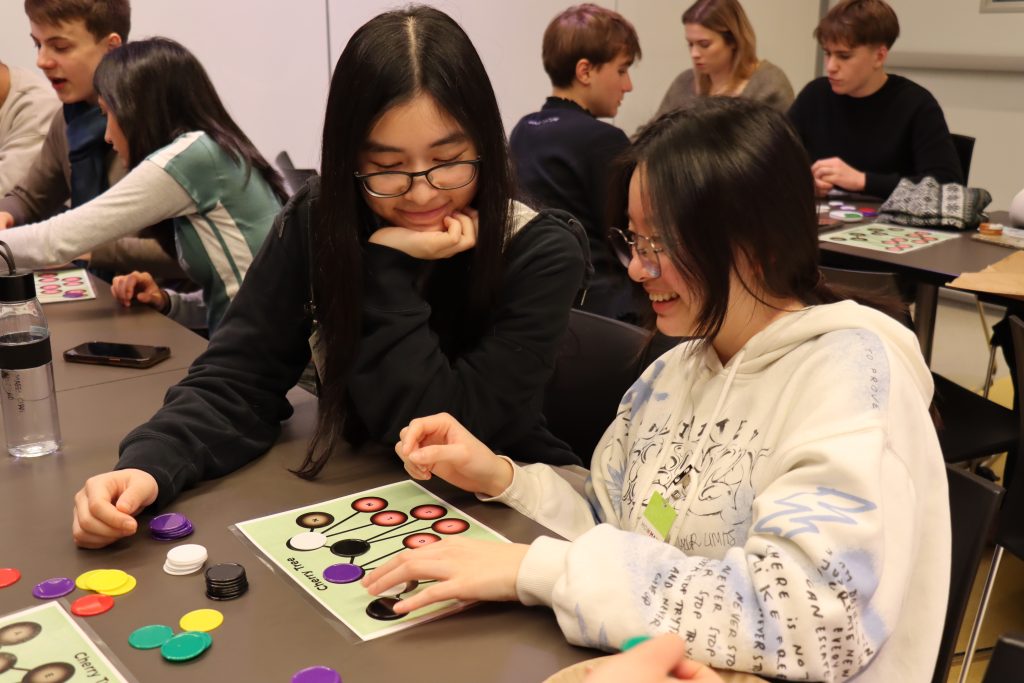
During our visit to the National Museum of Mathematics (MoMath) in Manhattan, we had the opportunity to explore a wide range of interactive exhibits that demonstrate how mathematics appears in everyday life. The museum encourages hands-on learning, allowing us to experiment with mathematical ideas through puzzles, models, and digital displays.
In addition to exploring the exhibits, we took part in two masterclasses. The first focused on inscription, exploring the mathematics of patterns and how they can be used to hide a message, while the second introduced us to basic graph theory, showing how networks and connections can be analysed mathematically. The visit was both engaging and insightful, offering a fascinating glimpse into the creativity and real-world applications of mathematics.
By Tudor P
iFly
On Wednesday, we travelled to Queens for an indoor skydiving session. We started with a demonstration from an instructor, who performed a series of impressive manoeuvres far from what we would be attempting but incredible to watch. Afterwards, the instructor introduced the physics behind the indoor skydiving. We were shown different objects and asked to predict which one would lift first based on its surface area, shape, and mass.
Seeing ideas we had learned in class like air resistance and terminal velocity play out in real life right in front of us made the lesson surprisingly fun. Then it was our turn to fly. After suiting up, we each waited for our turn in the wind tunnel.
When it was finally mine, the sensation was different from what I’d imagined; although I was suspended in the air, the strength of the wind made it feel nothing like traditional “flying”. The highlight came when the instructor joined me, increasing our combined surface area and sending us soaring upwards in a high flight, an exhilarating finish to the session.
Overall, the experience was a memorable mix of physics and pure adrenaline in the best possible way, making it one of my favourite moments on the trip.
By Ingrid C
McLaren
During our recent mathematics trip to New York, we had the privilege of visiting the McLaren Engineering Group, where we gained valuable insight into the diverse applications of engineering across civil, structural, marine, entertainment, and geotechnical projects.
The executive and a mechanical lead delivered an engaging and interactive session, encouraging us to ask questions and think critically about real-world engineering challenges. One particularly memorable example was their work on installing a giant inflatable dragon on top of the Empire State Building for a movie premiere. Despite weather conditions and limited connection points, the team demonstrated creativity, precision, and careful risk assessment to ensure safety and stability. We were also fascinated by the MGM Cotai Theatre’s 900-square-metre (the size of 3 tennis courts) movable video wall system.
With gaps of less than 2 mm between screens, the seamless visual experience highlighted the importance of advanced engineering, accuracy, and innovation. Beyond the technical aspects, he shared how to coordinate a team of over a thousand people, showing us that teamwork is just as important as technical skills. Overall, the visit was eye-opening, fun, and made many of us even more excited about studying engineering in the future.
By Adrian P